 Skip to content
 Kjersti G. Andvig & Lars Laumann
Redd Oktober
Lars Laumann and Kjersti G. Andvig have known each other for more than 30 years. Over that time, their friendship has moved through several versions of Norway and several versions of themselves, including periods where class was addressed directly, and others where it was easier to treat it as either a private matter or an outdated concept. Something you might mention in passing, before shifting to other terms such as background, geography or taste. At the same time, it has remained present in more indirect ways, as a condition that shapes how situations are read and responded to, and how certain decisions come to seem available or not.
As such, Redd Oktober builds on a long-standing, personal exchange, and can be difficult to pin down. At its centre is a new film, developed through an ongoing dialogue between the artists and marked by a sustained (mostly friendly) disagreement about what their own class histories “count” as, and what kind of authority they can claim when speaking about class at all. Both have moved, both have made use of the possibilities available to them, and both have encountered the difficulty that mobility changes how class appears without removing it. It tends to shift into the background, where it becomes harder to point to directly, even as it continues to organise experience.
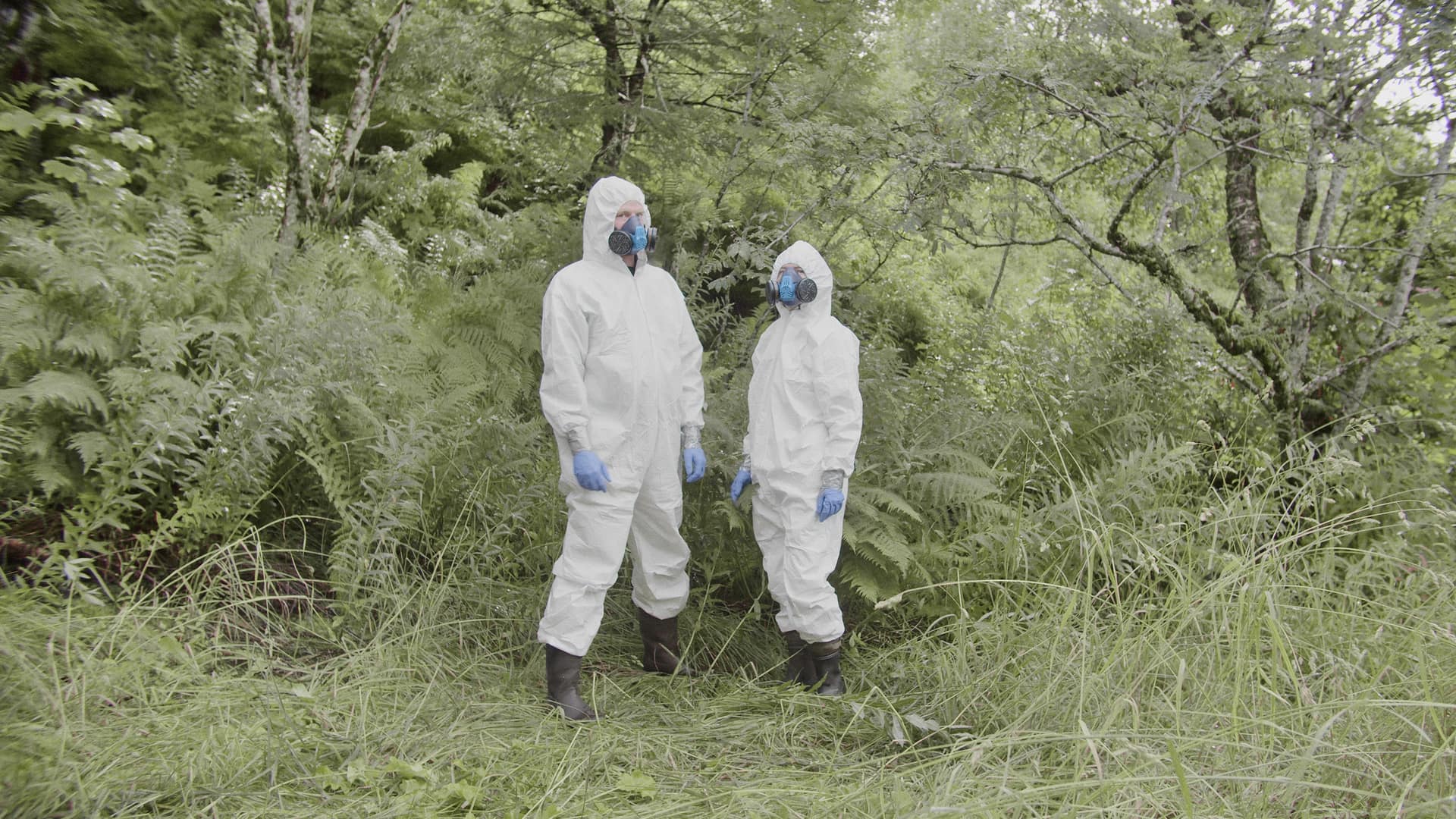
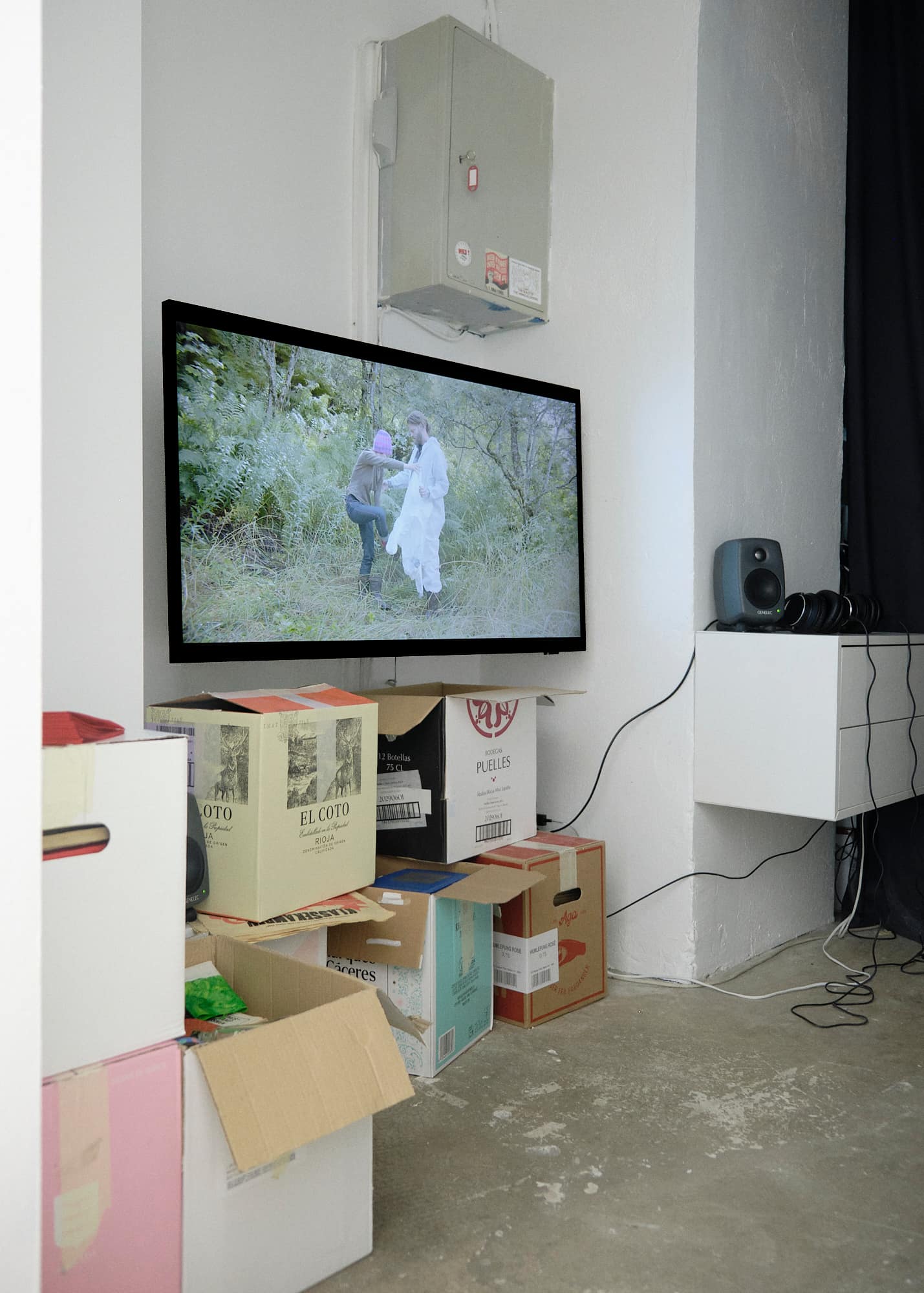
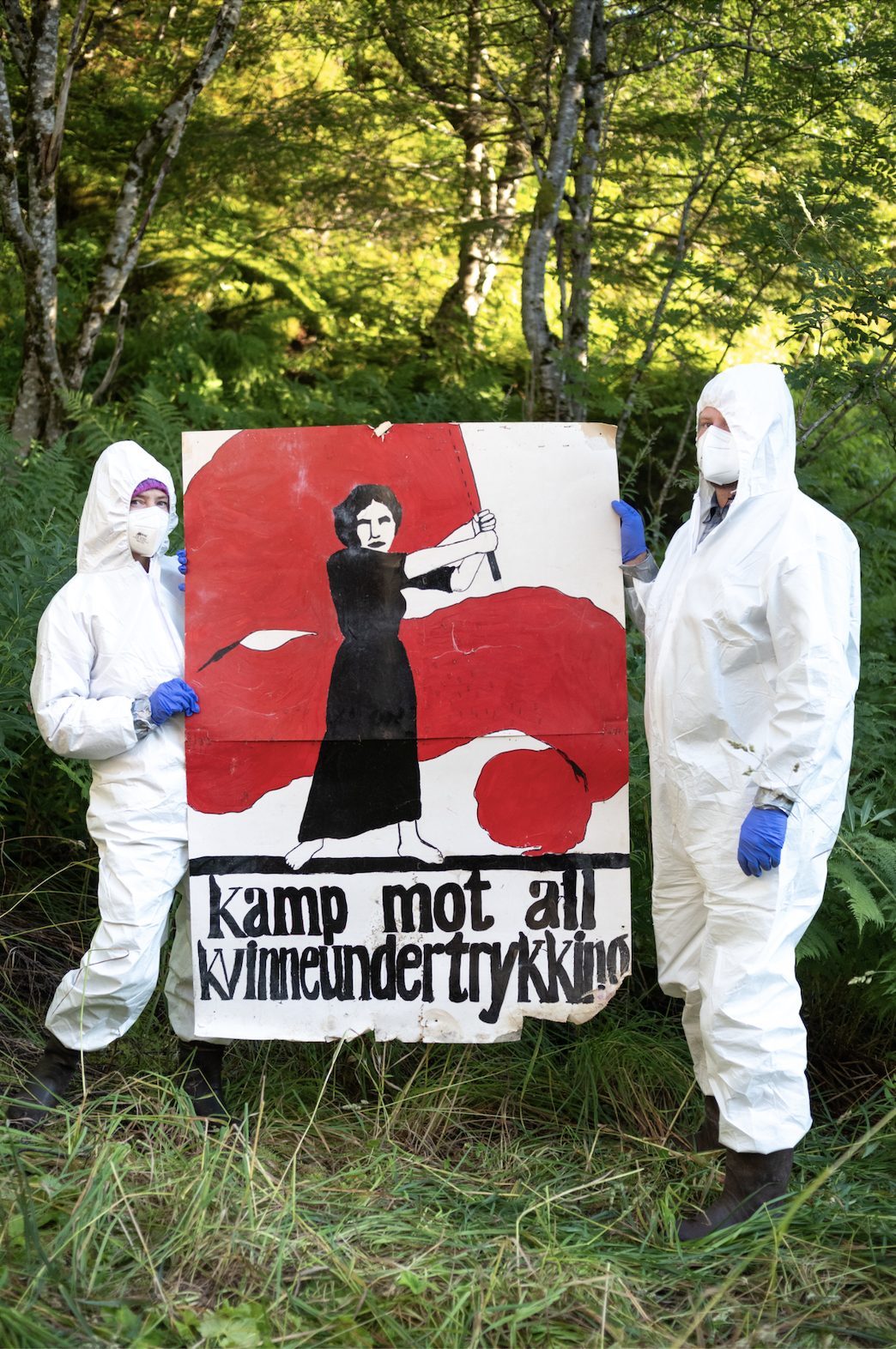
The exhibition, including the film, is based on a former Oktober book outlet found in Andvig’s family basement in Northern Norway, part of a network of underground, politically affiliated bookshops active in the 1970s and 80s. Books are still there in varying condition. Some are no longer readable; others can be handled and brought back into circulation. In the film, presented in six chapters, the artists return to the basement to recover what they can. Books, pamphlets and other materials are sorted and handled, sorted first objectively by degree of mold and disintegration, next by their contents, and the artists’ subjective valuation of them. While some are set aside, and most are taken out, the process continues alongside a conversation that moves between family histories, work, geography and memory, with occasional digressions and shared anecdotes.
The artists come from what might be called “book families”. In Andvig’s case, books were part of a political infrastructure, tied to organised distribution and collective discussion. In Laumann’s, they were part of a local economy, connected to retail, ownership and a small-town context (the Laumann bookshop was later sold to Norli). These differences carry through into how class is understood and how it can be spoken about, and shape the terms of the conversation that unfolds in the film.
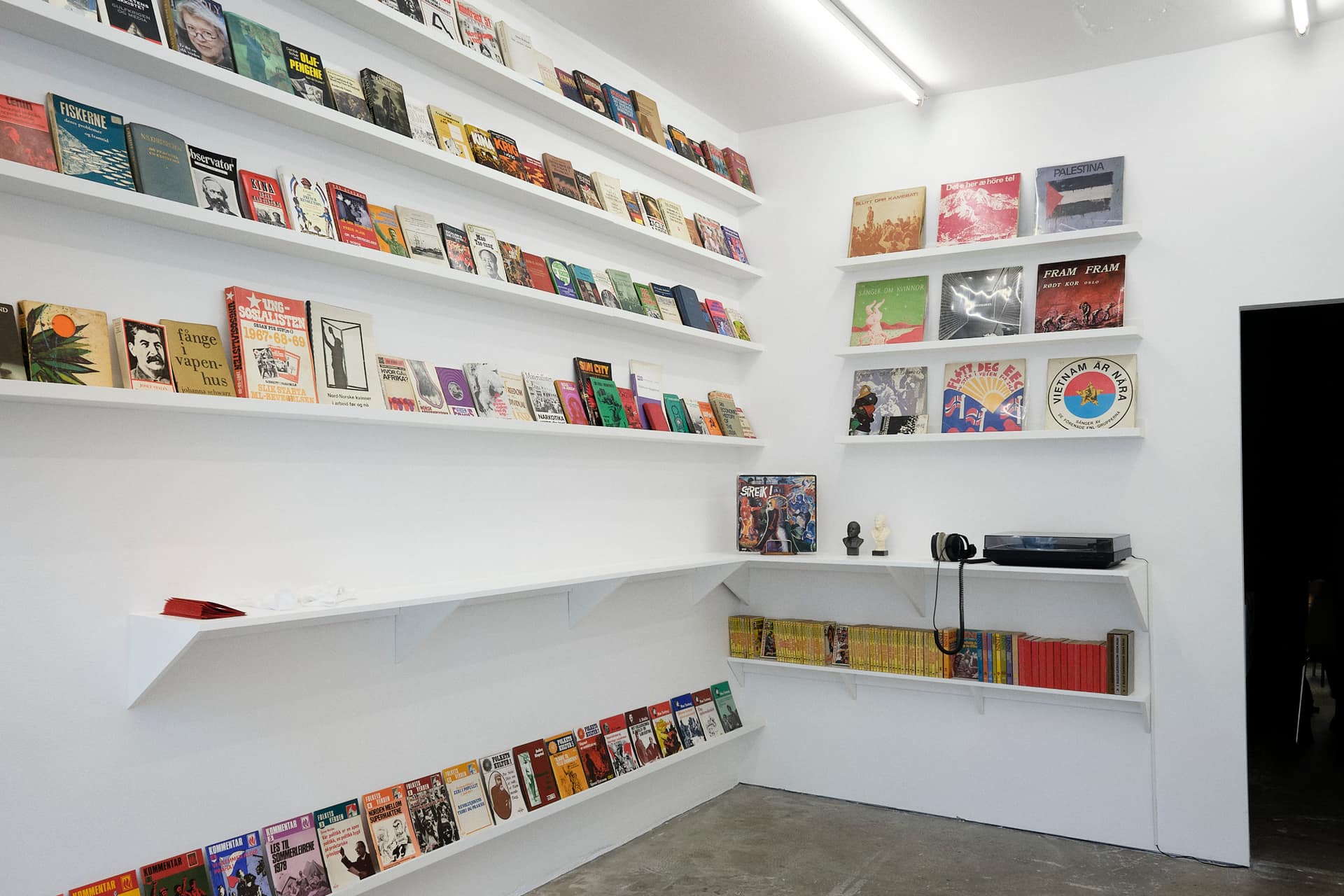
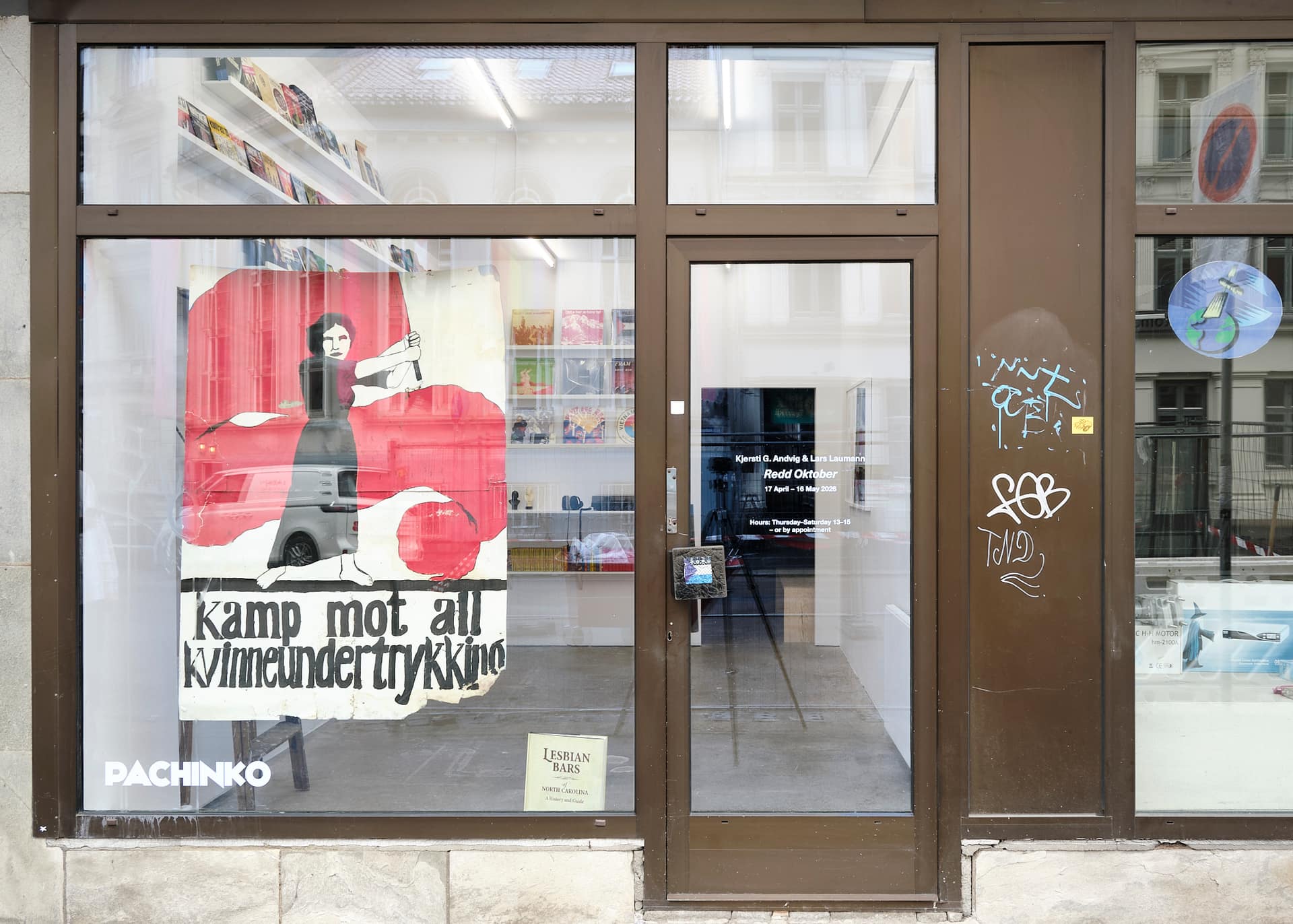
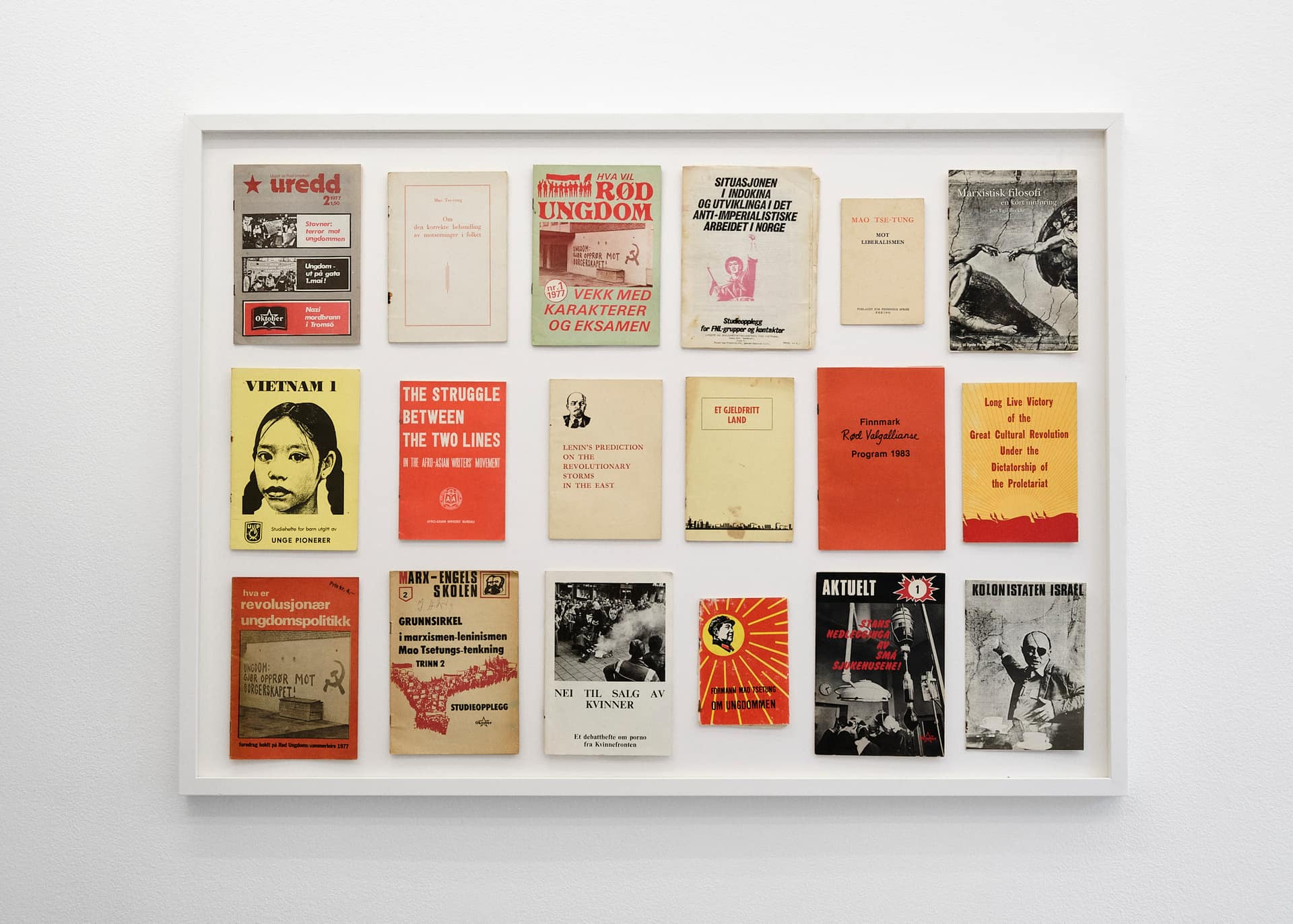
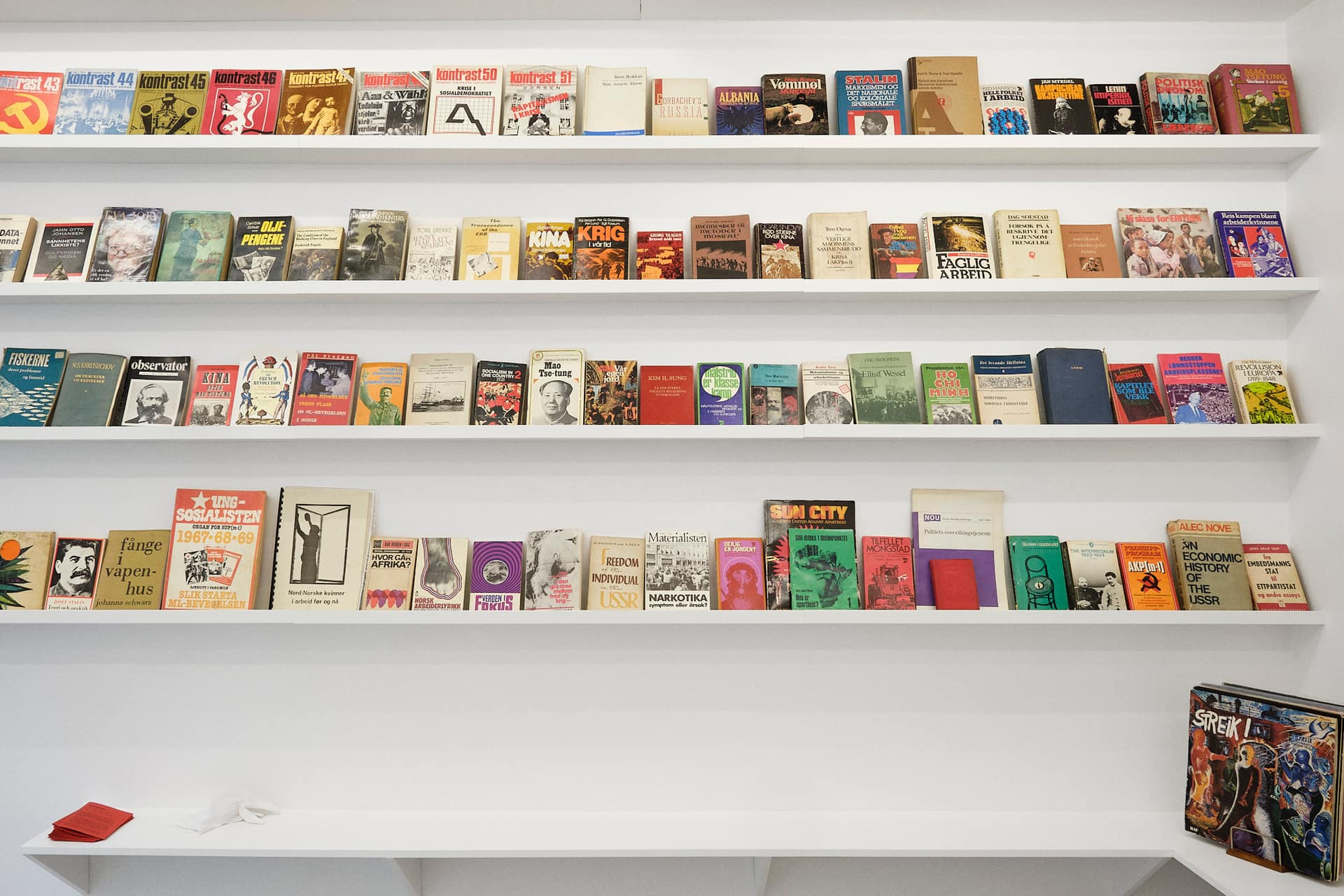
Alongside the film, a wide selection of the books, posters and LPs from the disused Oktober book store in Svolvær has been brought to Oslo. The material spans subjects such as child rearing, education, geopolitics, women’s rights, fishing, consumption, psychology and nature – most but not all of these from a revolutionary perspective. Regardless of their orientation, class runs through them as a way of framing questions and organising knowledge. Read together, they point to a moment when class could serve as a more stable reference point across different areas of life, while clearly structuring a past, present and future.
Without stating it directly, the exhibition circles a question of class consciousness and its relative disappearance in the present. Class no longer present itself as a shared framework in the same way. It mostly appears through other forms of description, and is often difficult to isolate as a category on its own. The material in the exhibition suggests a different situation, where class could be used more directly as a way of making sense of social relations. The conversation between the artists takes place at a distance from that situation, moving through hesitation as much as assertion, and often returns to the question of how to speak about class without settling into a fixed position or a set of ready-made terms.
Lars Laumann lives and works in Brønnøysund, Norway. He studied at the Norwegian State Academy in Oslo and the North Norwegian Art and Film School in Kabelvåg. His work is held in collections including Tate Modern, London; the National Museum, Oslo; KORO – Public Art Norway; and MOCAK, Kraków. He has presented solo exhibitions at institutions such as Kunsthalle Winterthur, Maureen Paley (London), Foxy Production (New York), Bunkier Sztuki (Kraków) and Kunsthall Oslo, and has participated in major group exhibitions including the 5th Berlin Biennial and the Liverpool Biennial.
Kjersti G. Andvig studied at the National Academy of Fine Art in Oslo, Northbrook College in Worthing, and the North Norwegian Art and Film School in Kabelvåg. Her work has been shown in solo and duo exhibitions at venues including Cabaret Voltaire (Zurich), Rogaland Kunstsenter (Stavanger), Grand Union (Birmingham) and Etablissement d’en face (Brussels). She has participated in group exhibitions such as Lofoten International Art Festival (LIAF), EVA International, Carnegie Art Award exhibitions, and shows at institutions including Astrup Fearnley Museet and the National Museum, Oslo.